
Composting for kids isn’t just a fun way to play in the dirt; it’s a gateway to becoming a mini environmental hero! Imagine your child transforming kitchen scraps into nutrient-rich soil while learning about the magic of decomposition. It’s like science class meets a backyard adventure, and who doesn’t want to be a part of that?
What Is Composting?
Composting transforms organic materials into nutrient-rich soil. This process uses kitchen scraps and yard waste, creating an educational experience for kids.
Benefits of Composting
Composting provides several advantages for kids. It teaches responsibility by allowing children to manage organic waste. Engaging in composting encourages an understanding of ecosystems and soil health. Nutrient-rich compost also promotes plant growth, enabling kids to witness the results of their efforts. Developing an interest in sustainability at a young age builds environmental awareness that lasts a lifetime.
Importance of Composting for Kids
Composting holds significant importance for children. It fosters critical thinking skills as kids learn about decomposition and food cycles. By participating in this activity, they gain hands-on experience with natural processes. Composting builds a connection to nature and an appreciation for waste reduction. Cultivating these habits can lead to environmentally conscious choices throughout their lives.
Getting Started with Composting for Kids
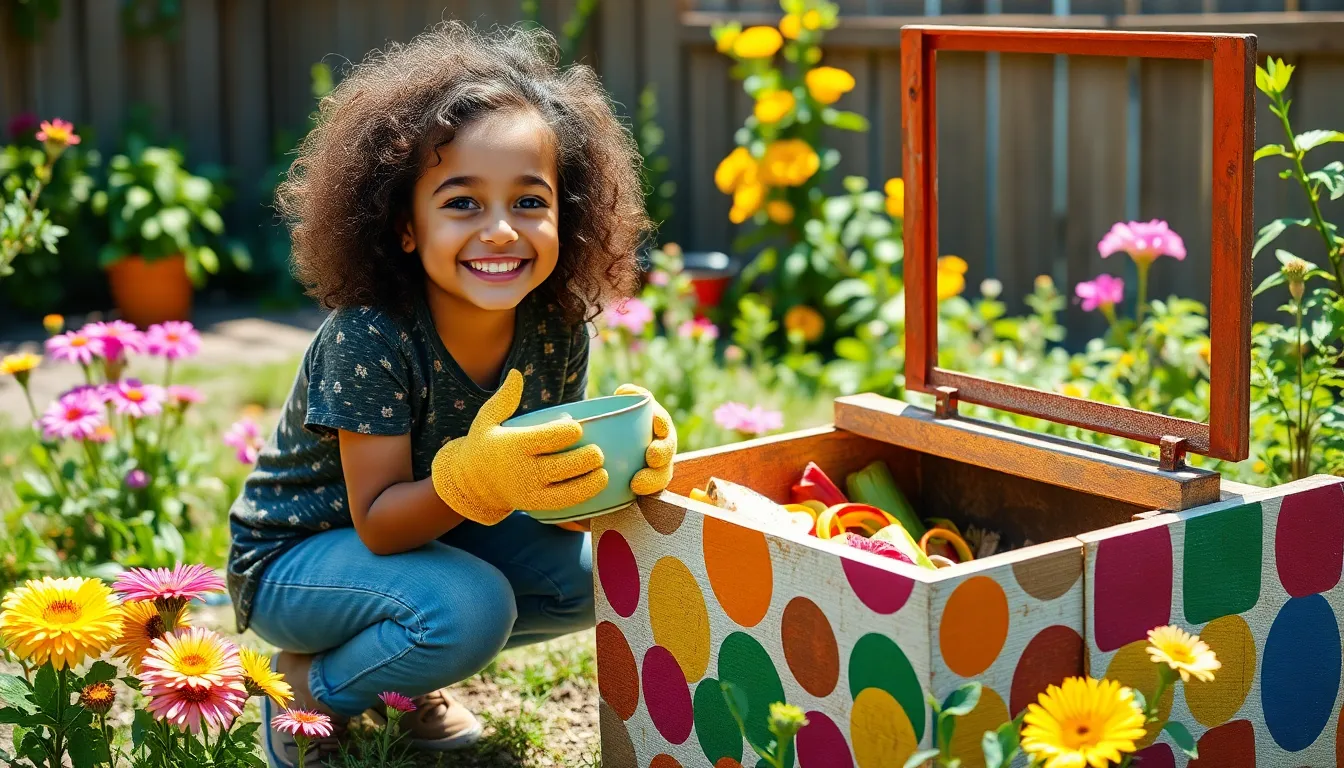
Composting provides an interactive way for kids to learn while enjoying the outdoors. Getting started involves choosing the right materials and compost bin.
Choosing the Right Compost Bin
Selecting a suitable compost bin simplifies the process for kids. Options include indoor bins, outdoor tumblers, or traditional piles. Indoor bins fit smaller spaces and reduce odors. Outdoor tumblers allow for easy mixing and faster composting. Traditional piles require ample space but promote larger volumes. Each option encourages children to participate in composting effectively. Ensure the chosen bin has good ventilation, as airflow aids in decomposition. Kids can also decorate their bins to personalize the experience.
Compost Materials Suitable for Kids
Materials for composting should be easy for kids to gather and handle. Kitchen scraps like vegetable peels, fruit cores, and leftover bread work well. Yard waste, such as grass clippings, leaves, and small branches, also contributes. To create a balanced compost, include nitrogen-rich items like coffee grounds and eggshells. Avoid composting dairy products, meats, and oils, as these attract pests. Involving kids in material collection enhances their engagement. This hands-on approach builds their understanding of which materials benefit the composting process.
Fun Activities for Kids In Composting
Engaging kids in composting can be both enjoyable and educational. Various fun activities facilitate learning about the composting process while encouraging outdoor exploration.
Hands-On Composting Projects
Kids can create their own compost bins using simple containers. Building a layered compost pile lets them visualize decomposition in action. Gathering kitchen scraps and yard waste allows them firsthand experience collecting compost materials. Involving children in turning the compost promotes physical activity and responsibility. Measuring the temperature of the compost adds a scientific twist, demonstrating heat generation during decomposition. Monthly observations on the compost while discussing changes showcases their progress.
Learning Through Games and Crafts
Crafting compost-themed art projects brings creativity into composting. Making a composting wheel can teach kids about which materials are compostable. Organizing scavenger hunts for compost ingredients fosters teamwork and excitement. Using flashcards with composting facts can turn learning into a fun game. Indoor and outdoor games about recycling concepts provides an interactive way to reinforce critical thinking skills. These activities build vital knowledge while allowing children to express themselves artistically.
Tips for Teaching Kids About Composting
Teaching kids about composting integrates fun with learning while promoting environmental awareness. Parents and educators can employ various engaging methods to make this topic exciting and relatable.
Engaging Methods for Kids
Interactive activities capture children’s interest effectively. Creating hands-on compost bins allows kids to see organic materials break down over time. Letting them gather compost ingredients from the kitchen makes the process personal. Demonstrating how to layer materials provides visual learning opportunities. Games like identifying compostable versus non-compostable items foster critical thinking skills. Storytelling about worms and decomposers nurtures curiosity while reinforcing essential concepts. Allowing kids to perform regular observations helps them track changes and cultivates patience. Finally, celebrating compost’s transformation into rich soil connects them deeply to nature.
Resources and Tools for Educators
Utilizing varied resources enhances the composting education experience. Incorporating picture books about composting offers captivating visual aids. Online videos showcasing the composting process provide dynamic learning moments. Utilizing lesson plans tailored to different age groups ensures content remains age-appropriate. Printable worksheets allow kids to record their findings systematically. Providing composting kits with clear instructions simplifies the process. Engaging with local community gardens can connect kids with real-world composting practices. Finally, encouraging participation in school-wide composting initiatives fosters teamwork and a sense of responsibility.
Composting for kids opens up a world of discovery and responsibility. It encourages them to engage with nature while learning about the environment and sustainability. This hands-on experience not only nurtures a sense of curiosity but also instills lifelong habits that promote eco-friendliness.
By transforming kitchen scraps into valuable soil, children gain insight into ecosystems and the importance of waste reduction. The activities associated with composting make learning fun and interactive, fostering teamwork and creativity.
As kids dive into this enriching journey, they become active participants in caring for the planet, shaping their future as environmentally conscious individuals. Embracing composting today lays the groundwork for a greener tomorrow.

